In these schemes, fraudsters deceive their victims by pretending to be trustworthy individuals—whether bank representatives, government officials, police officers, or even family members.
The global impact of imposter scams, which often cause serious financial, reputational, and psychological harm, is a growing concern. At the Czech & Slovak ThreatMark Fraud Summit, bank representatives, police officers, and anti-fraud professionals from various sectors shared their insights on this troubling trend.
In Czechia, the incidence of fraud involving fake bankers and investment advisors has risen significantly, according to Czech police representative Ondřej Kapr. In these cases, fraudsters are highly cunning and adaptable, constantly altering their sophisticated manipulations over time.
This trend was also confirmed by Marek Macháček, a representative of Komerční banka, one of the largest banks in Czechia. He noted that the number of crypto-investment scams impersonating investment bankers has sharply increased. In 2023, this type of fraud accounted for half of all fraud attempts, but by 2024, it had grown to 80%.
This pattern is not limited to Czechia; it can be observed in other countries as well. At the Fraud Summit, Mark Winters shared statistics from the UK, highlighting similar trends. In 2022, imposter fraud involving the police, banks, or other organizations made up the largest portion of total authorized push payment (APP) fraud losses, totaling £177.6 million. In 2023, British consumers lost nearly £148 million to various forms of impersonation fraud (CEO, police, bank staff, and others), according to UK Finance.
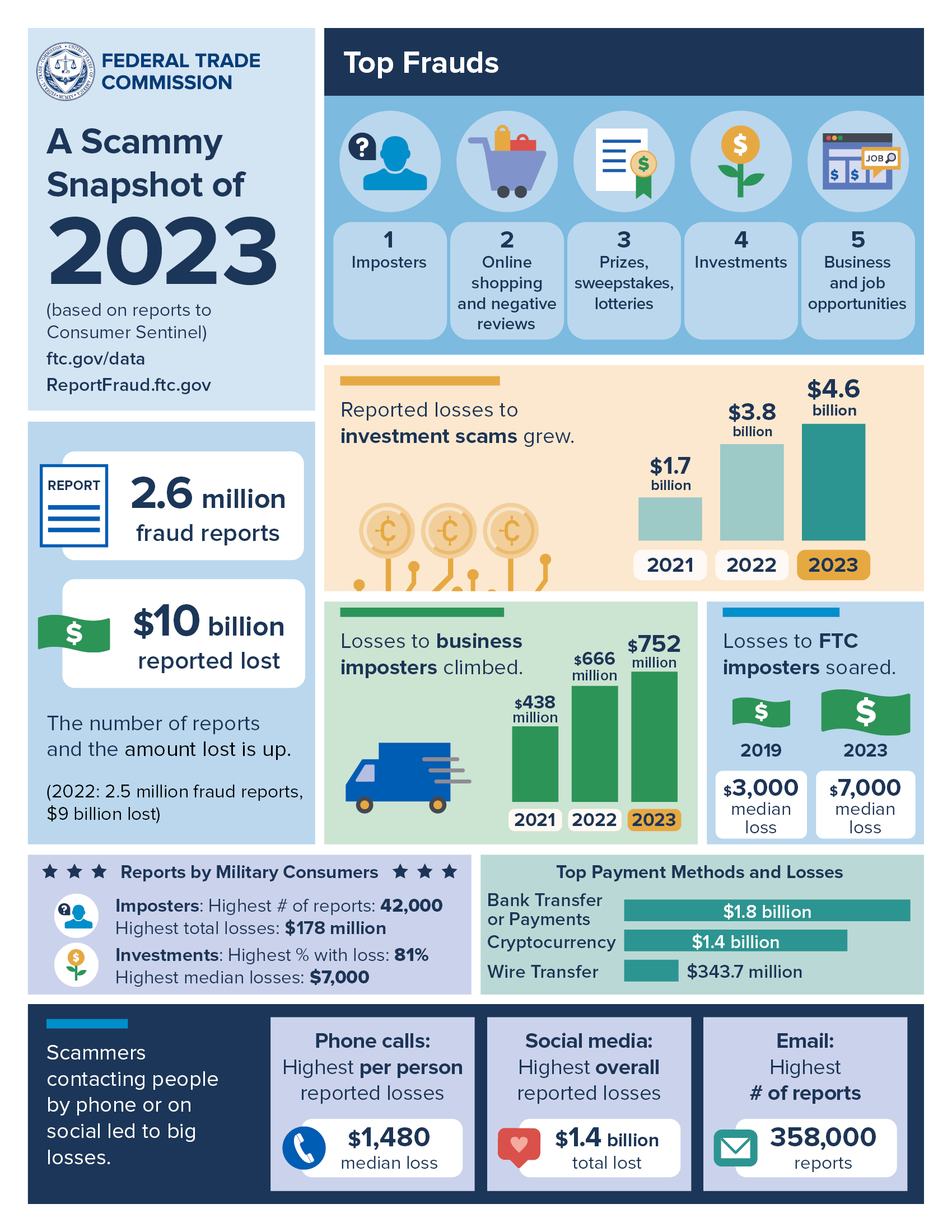
Imposter fraud is also a leading category in the US. In 2023, there were over 856,000 reported cases. Losses from business and government impersonation scams, in particular, rose significantly, reaching $1.1 billion—more than three times the amount reported by consumers in 2020.
Damages from imposter fraud are not only widespread but also substantial. In 2023, the median loss from government impersonators in the US was $1,400. Scammers posing as US Customs and Border Protection inflicted the highest average loss, at $4,200. Meanwhile, in the UK, the average loss per victim was £7,448.
Impersonation fraud is a classic example of social engineering, exploiting inherent traits of human psychology. Below are some of the main tactics used in these scams.
Who are the real individuals behind imposter scams? Police experience shows that they are rarely acting alone. At the Czech & Slovak ThreatMark Fraud Summit, it was noted that impersonation fraud often requires a high level of organization, with many scams following specific templates. This sophistication is confirmed not only by the Czech Police but also by INTERPOL, indicating that these criminals are almost always part of well-organized groups.
In addition to financial loss, imposter scams inflict considerable reputational harm. They erode consumer trust in digital security and in the institutions that fraudsters imitate.
The situation is particularly challenging for banks. Impersonating bank representatives is a common tactic for fraudsters, posing a serious reputational threat. Additionally, according to 2023 FTC data, bank transfers accounted for about 40% of reported losses linked to US government and business impersonators.
Finally, banks are confronting yet another significant challenge. Due to the rise and severe impact of these scams, this type of fraud has attracted the attention of regulators, who are increasingly demanding that banks compensate victims.
In some countries, such as the UK, the compensation rate for victims of police or bank staff impersonation scams is already notably high, at 78%—the highest among all scam categories.
This practice is expected to shift to Europe, increasing pressure on banks that have not yet reimbursed victims of imposter scams. In the proposed PSD3, which is anticipated to be adopted in early 2025, the EU is taking a similar stance, requiring mandatory compensation for victims of bank impersonation scams that involve spoofing.
Compensating victims is likely the most effective way to protect reputations, particularly in cases involving fake bankers. However, it poses a challenge for banks. To avoid high compensation costs, they must strengthen their prevention and detection mechanisms. Yet, a large portion of imposter scams fall under authorized push payment (APP) fraud, where customers make seemingly legitimate payments under false pretenses—complicating detection efforts.
As impersonation scams use a wide range of fraudulent methods, they require a comprehensive approach to detection and prevention. One of the most efficient in this regard is behavioral intelligence. Its advantages lie mainly in its ability to detect both authorized and unauthorized fraud in real time across all digital channels, based on a variety of signals.
ThreatMark’s Behavioral Intelligence Platform integrates behavioral data with various other inputs, enabling it to assess whether:
Individually, these factors might not be conclusive, but when evaluated together and in context, they can detect an imposter scam with remarkable accuracy.
One of the standout advantages of the Behavioral Intelligence Platform is its all-encompassing approach. It not only stops fraudulent transactions but also uncovers attempts to imitate legitimate banking platforms and pinpoints the attackers’ infrastructure, devices, tools, locations, payment methods, and vendors. This makes it possible to dismantle entire fraud networks, offering broad protection to bank customers.
Impersonation scams are a growing threat to the stability of the digital world, a danger that will only intensify with the advancement of AI-generated deepfakes. To keep pace with increasingly sophisticated fraudsters, avoid severe financial and reputational damage, and meet stricter regulatory demands, banks should urgently adopt advanced technologies—such as behavioral intelligence. Investing in these cutting-edge tools is crucial to securing the digital environment and maintaining consumer trust.