
Improve authorization
with contextual data.
Many transaction monitoring systems in use today focus solely on analyzing payment-related data. With numerous false positives from ineffective monitoring, the impact on bank staff to review these false results in heavy additional costs and time inefficiencies.
ThreatMark provides an additional layer of data that goes beyond payment-related data. Continuously verifying the user’s identity and intentions through behavioral biometrics, session parameters, transaction details, and other interactions across all digital channels, ThreatMark provids detailed information on user interactions and context by implementing deep behavior profiling.
This extensive dataset improves detection rates, soaring by 70%, while simultaneously slashing false positives by 90%.
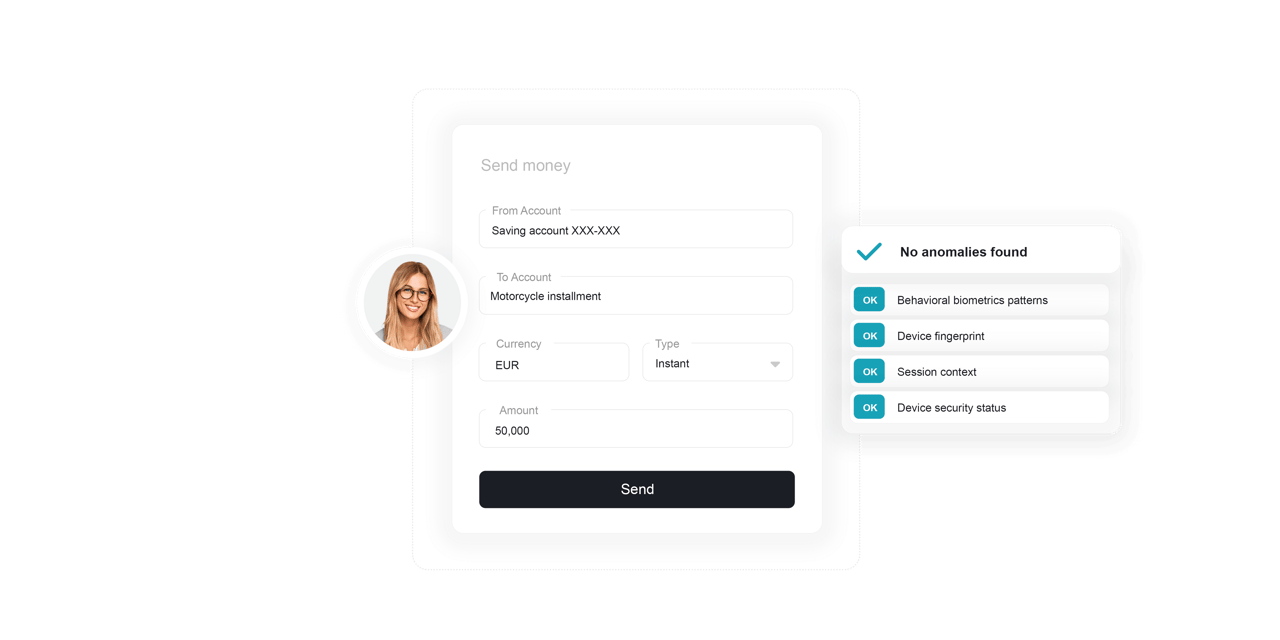

Transactional Risk Analysis
To determine a low-level of risk, banks need to analyze various factors of a transaction in real time. ThreatMark provides a comprehensive solution that considers all necessary factors to avoid unnecessary MFA whenever possible.

3D Secure Card Payments Authorization
E-commerce requires strong security measures like 3D Secure to prevent Card-Not-Present (CNP) fraud. 3DS adds an extra layer of security for online credit card transactions but can sometimes cause inconvenience and lead to high transaction abandonment.

Strong & Invisible Authentication
Strong and invisible authentication crucially balances advanced security with a seamless customer experience. Utilizing technologies like behavioral biometrics and behavioral analytics, authenticating users subtly and effectively can minimize the risk of fraud and unauthorized access.