
ThreatMark Challenges Detection-First Fraud Models with Fraud Disruption Ecosystem
ThreatMark has released a new whitepaper challenging traditional fraud prevention strategies as global fraud losses exceed $1 trillion and social engineering scams continue to rise.
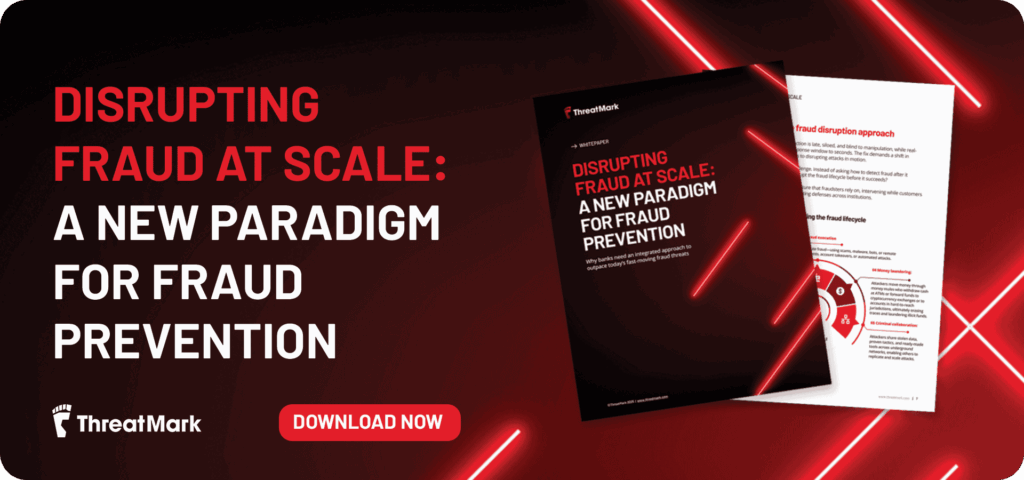
The whitepaper, Disrupting Fraud at Scale: A New Paradigm for Fraud Prevention, introduces the Fraud Disruption Ecosystem, a proactive framework designed to help banks intervene earlier in the fraud lifecycle and prevent losses before they occur.
As fraud schemes become more organised and technology-driven, many financial institutions still rely on detection-first models that operate in silos. These approaches often identify fraud only after customers have been manipulated and funds have already moved, limiting a bank’s ability to prevent harm.
Why Detection Alone Is No Longer Enough
ThreatMark’s research highlights the growing gap between how fraudsters operate and how fraud is typically detected. Criminal networks now use shared infrastructure, specialised roles, and AI-enabled tactics, while banks often focus on isolated signals rather than the full attack journey.
The Fraud Disruption Ecosystem addresses this challenge by connecting four key capabilities into a unified strategy. These include early disruption of scam infrastructure such as phishing sites, real-time customer protection within banking apps, behavioural intelligence to detect manipulation as it happens, and intelligence sharing to expose mule networks and emerging threats.
The whitepaper uses bank impersonation scams as a practical example. These scams are the most common fraud type in the United States, responsible for $2.95 billion in losses. By acting across multiple stages of the attack lifecycle, banks can reduce losses instead of relying on post-transaction reimbursement.
“With fraud becoming more organised, AI-powered, and executed at scale, detection becomes harder. More importantly, thanks to the manipulative nature of scams, detection alone is no longer enough,” said Michal Tresner, CEO of ThreatMark. “Banks need to disrupt fraud throughout the whole attack lifecycle if they want to change outcomes for customers and institutions.”
The research also highlights increasing regulatory pressure, including PSD3 in the EU and APP reimbursement rules in the UK, which are shifting more liability onto financial institutions and increasing the cost of reactive fraud strategies.
The whitepaper is available for download on the ThreatMark website and is aimed at fraud, risk, and security leaders looking to reduce losses through earlier, coordinated intervention.